
Agentic AML
Investigation
Agents gather the evidence, test the alert against your full typology library and draft the case and FIU report. Investigators validate, and review happens by exception.
How a Nordic bank rebuilt its alert investigation
We built this with a Nordic Tier-1 bank whose investigators triaged 400+ fraud alerts a month, spending over 100 minutes each, checking 80+ typologies by hand before a two-level sign-off. Built on Microsoft Foundry and a secure AI Landing Zone, our agents now gather the data, reason against the bank's own typologies, and draft the case, while the investigators validate and decide.
Up to
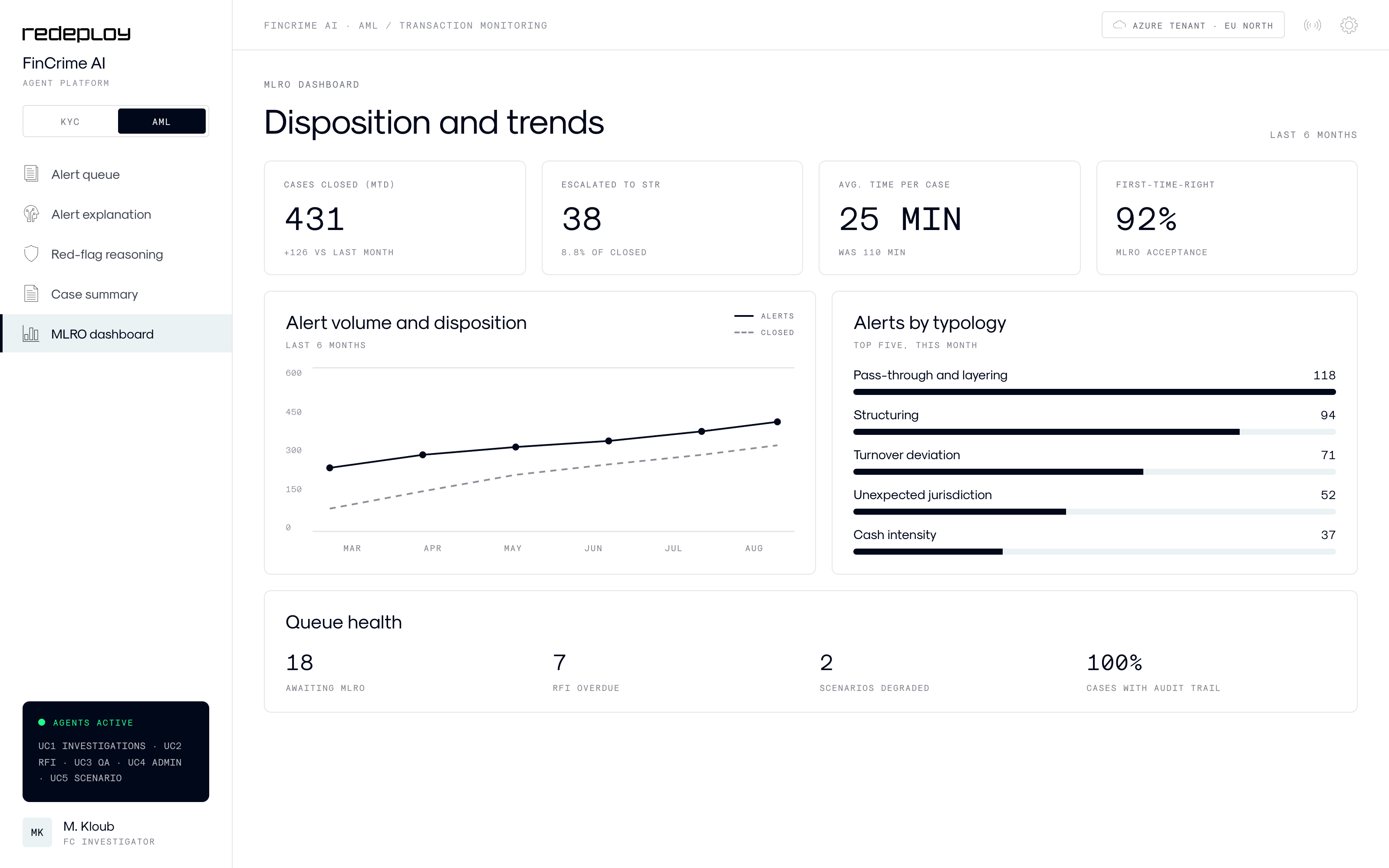
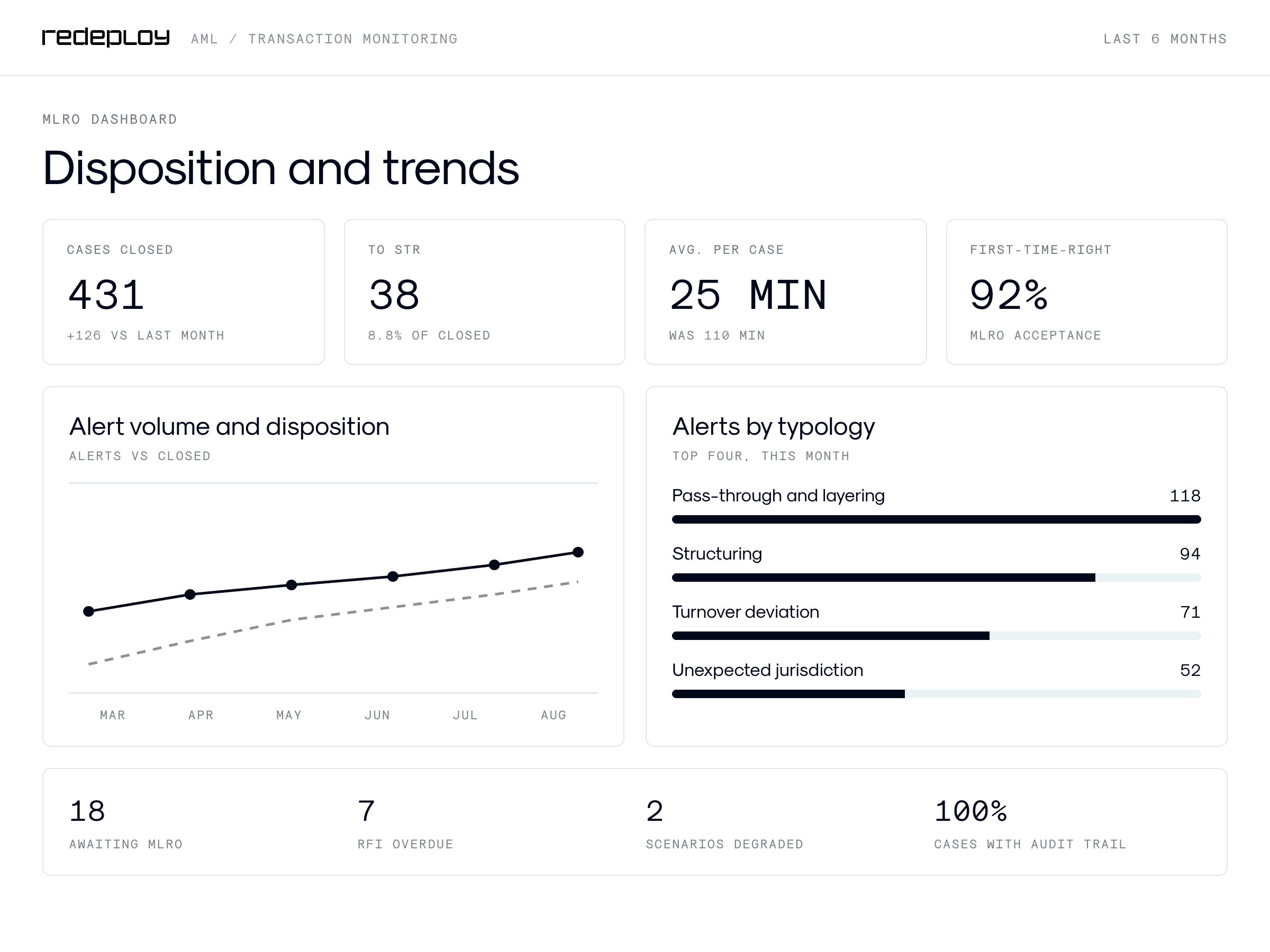
Less time per case
Up to
Investigator throughput
At least
First-time-right acceptance
Case-level audit trail

Assembly is automated. Judgment isn't.
Five agents. One complete investigation.
Alert Investigator Agent
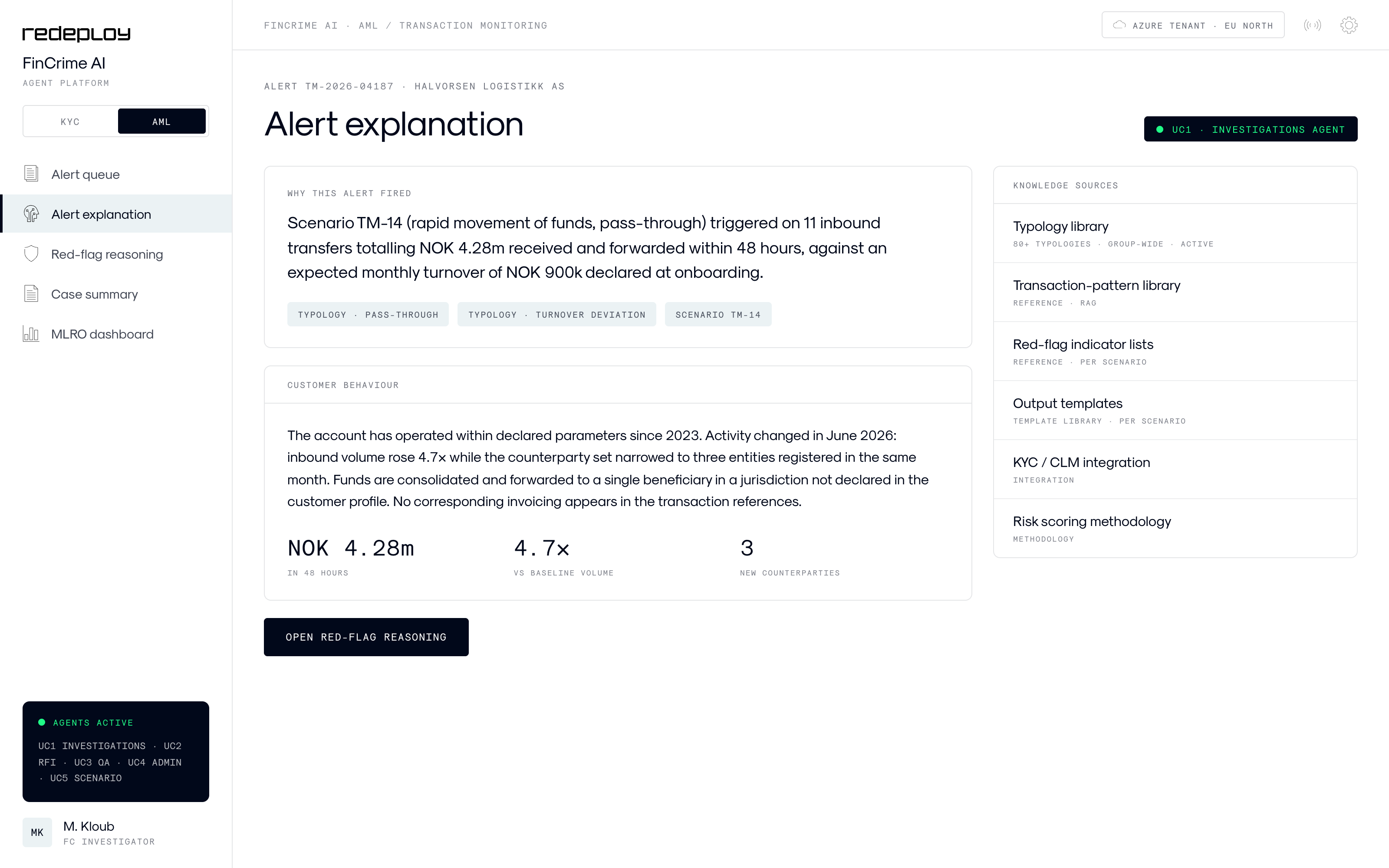
Reads the full alert bundle, KYC payload, and transactions. Produces a plain-language explanation of what triggered, and maps it to the relevant typology or scenario.
Behaviour Profile Agent
Reviews historic transaction patterns. States the facts before any judgment, then layers the typology-relevant signals on top, so the investigator sees the behaviour clearly.
Red Flag & Source of Funds Agent
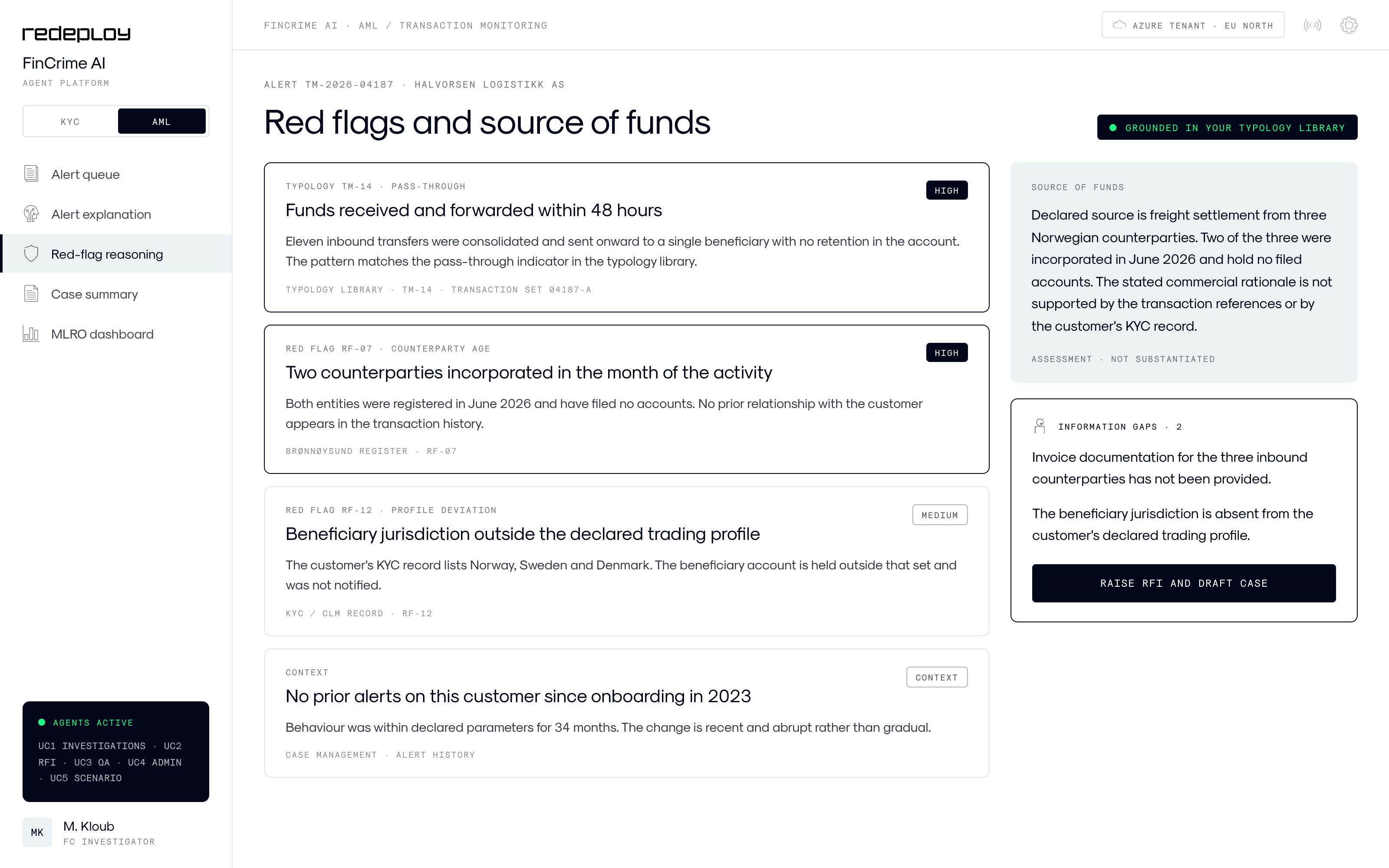
Identifies red flags with the reasoning behind each one, and runs the source-of-funds assessment. Grounded in your group policy and local law.
Gap Closer Agent
Flags the information gaps that would weaken the investigation, and points to where the missing data sits. Resolves gaps conversationally with the investigator.
Narrative Drafter Agent
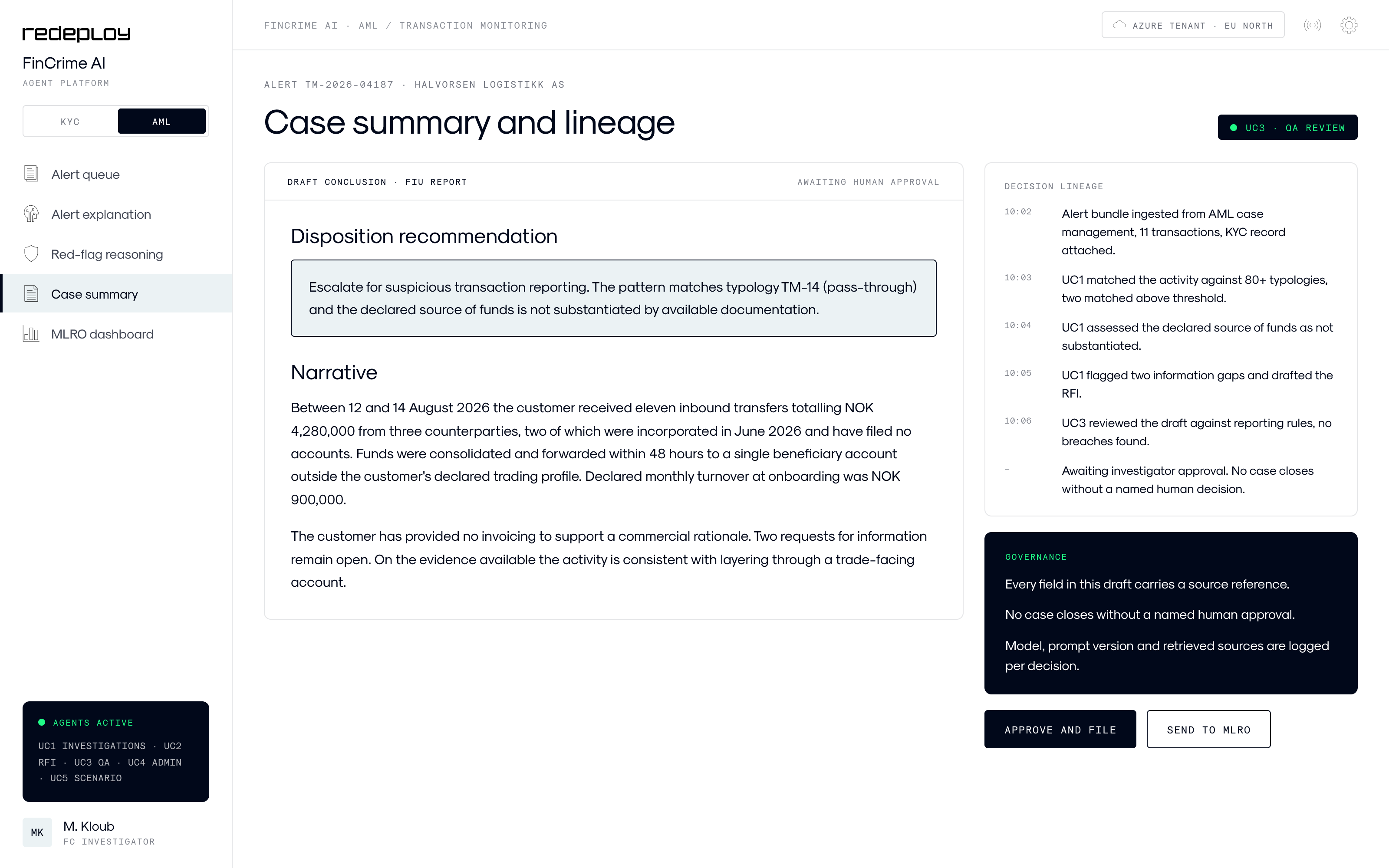
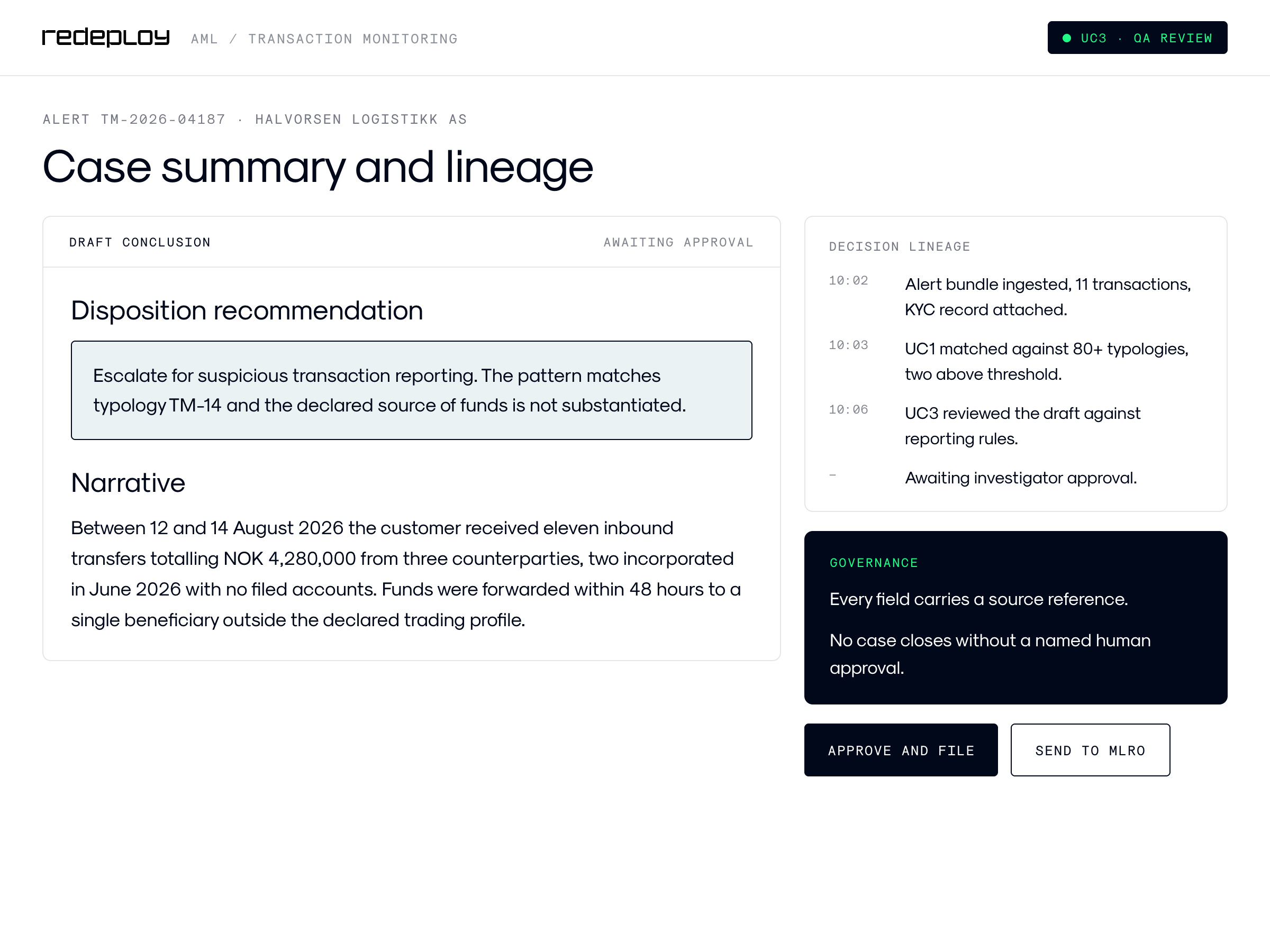
Drafts the SAR or STR narrative in your scenario-specific structure. The investigator validates, edits, and submits, with the full rationale captured in the audit trail.
What your investigators see
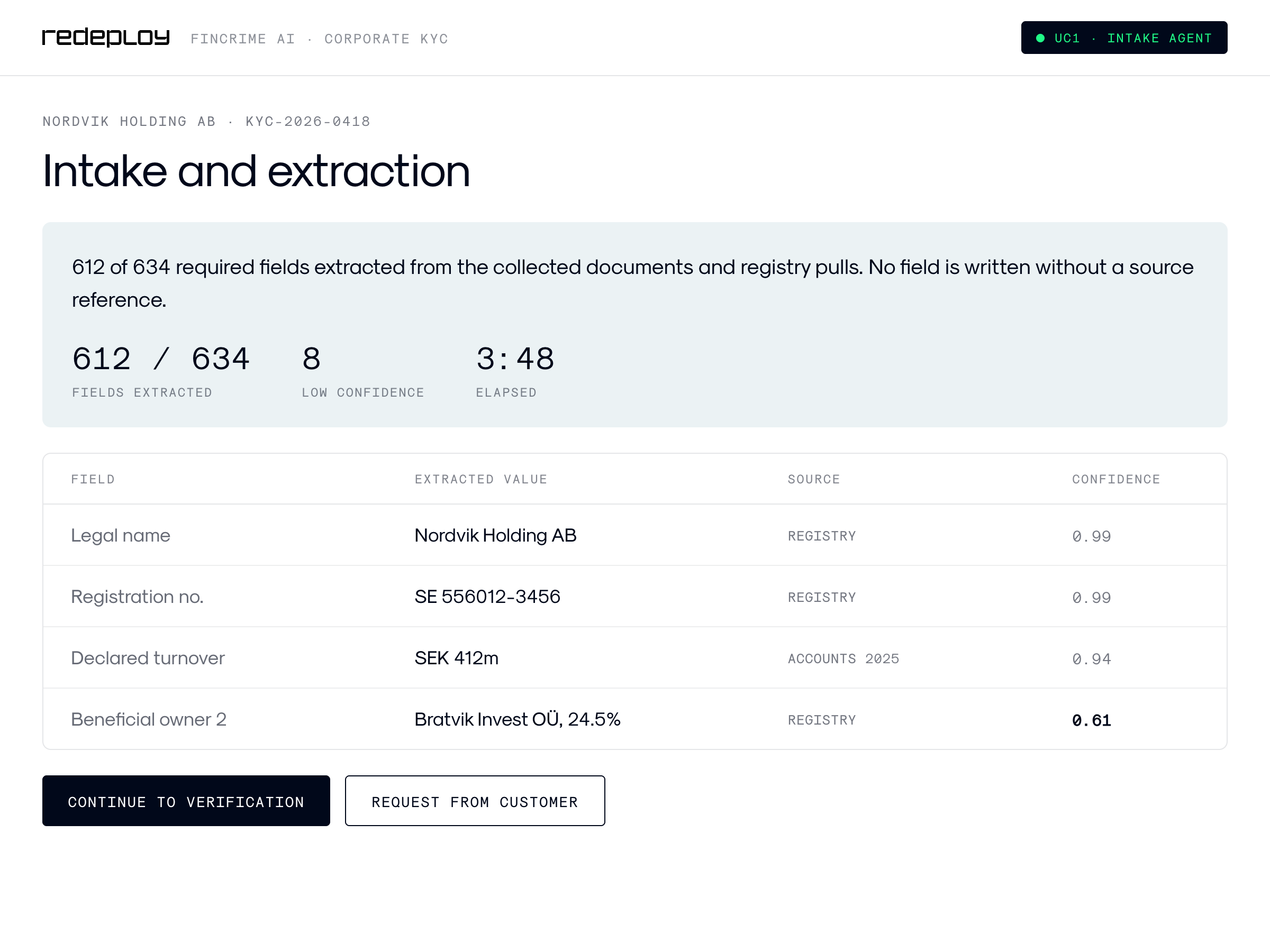
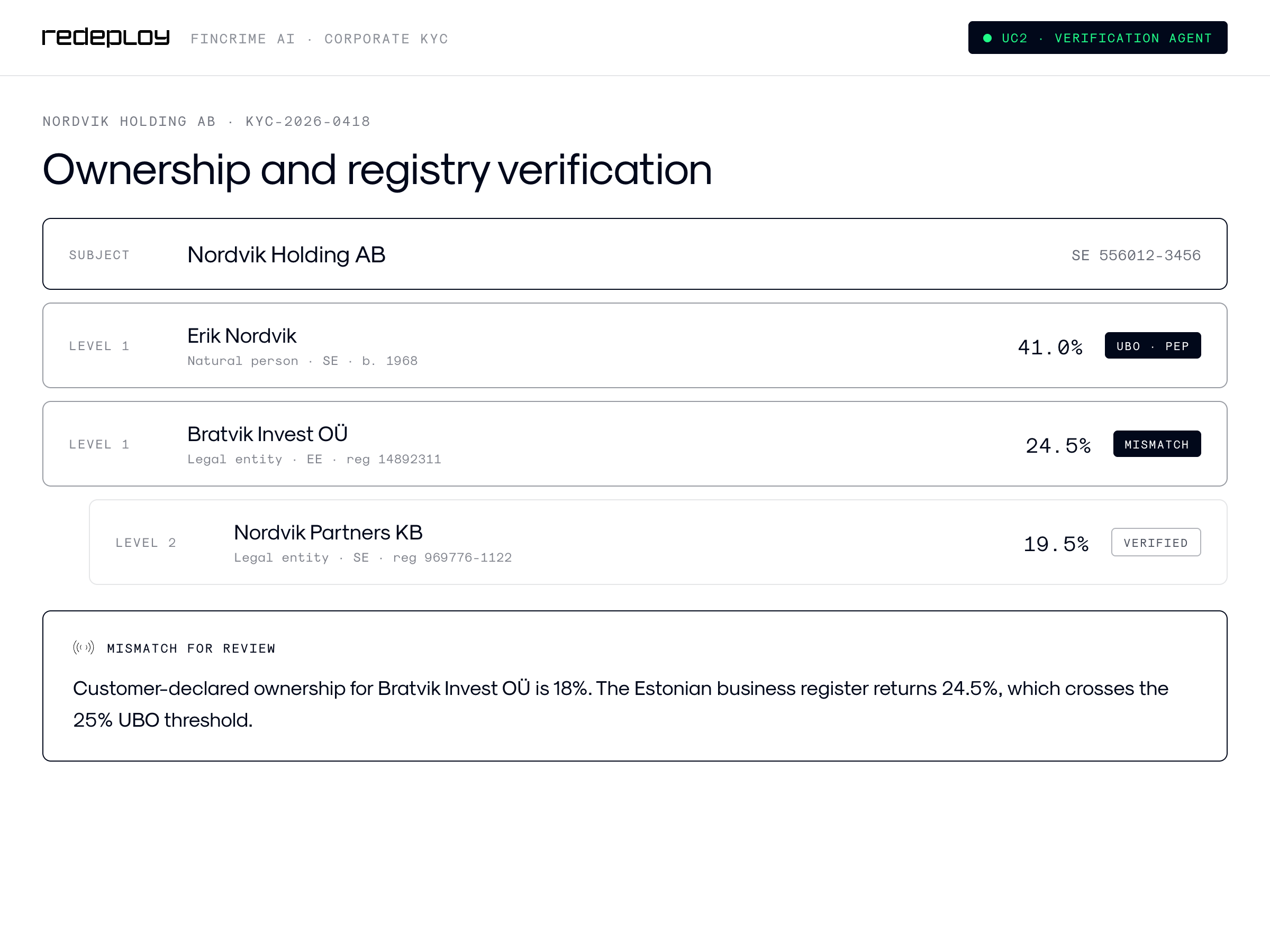
Your investigator opens a case that the agents have already built, with the alert explained, the red flags reasoned against your typologies, and the draft ready. The work starts with the decision.
Typology-first architecture
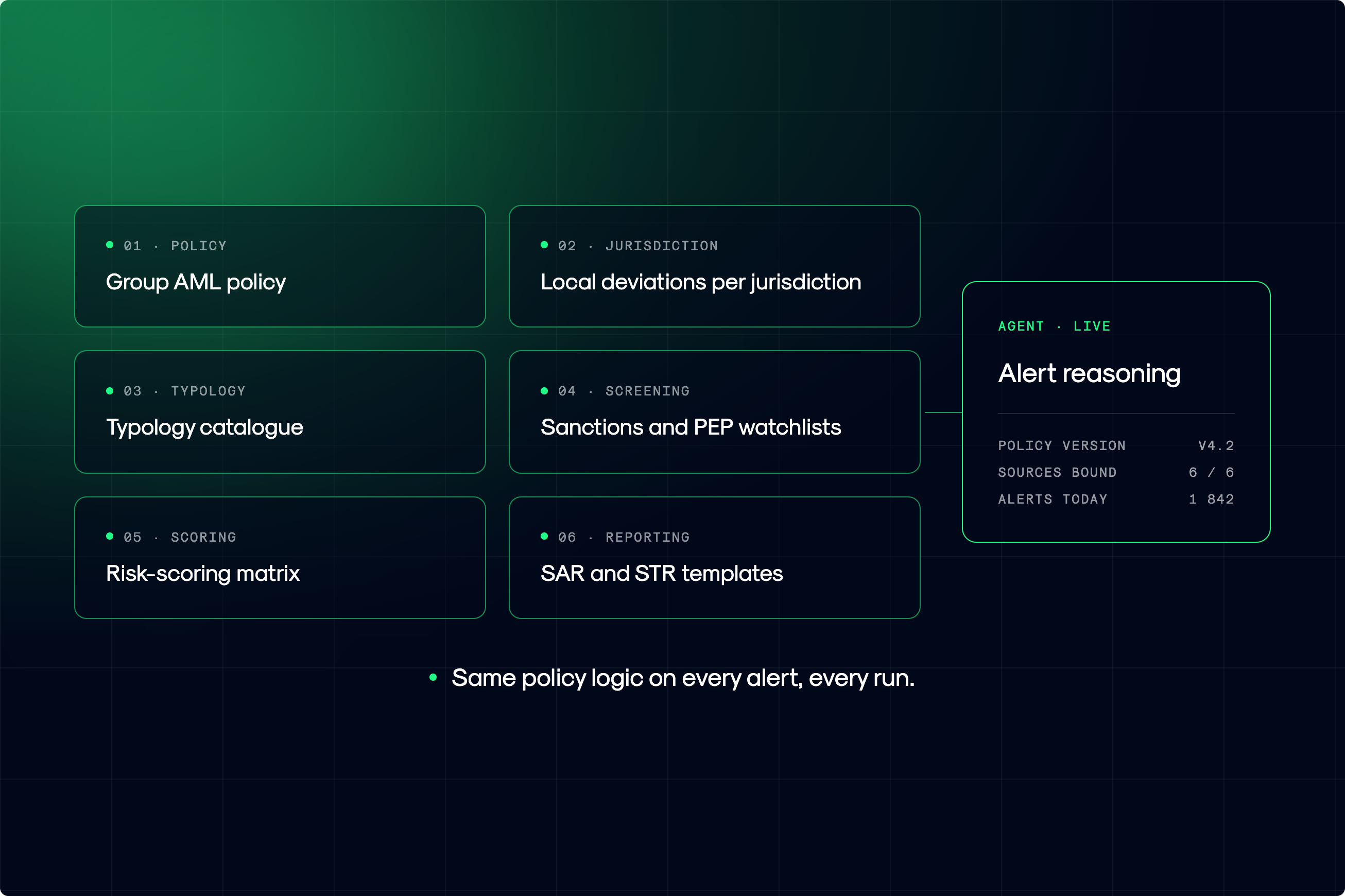
Built on a certified foundation
Microsoft Solutions Partner and AWS Advanced Tier partner, certified in data, AI, and security. That is how we deliver a solution that holds up in a regulated environment.
%201.svg)

%201.svg)
.svg)


Frequently Asked Questions
How is this different from a generic AML AI vendor or Copilot Studio?
Generic tools apply a cross-bank model or a generic playbook to an alert. Our system applies your typologies, your group policy, your local entity deviations, and your escalation logic to every case. Copilot Studio is a builder platform for simple tasks and not an investigation solution. The difference is the organizational knowledge layer we build before any agent reads an alert.
Does it generate the alerts, or replace our transaction-monitoring platform?
Neither. Your TM platform keeps generating alerts. Our solution sits on the investigation layer that the platform was never designed to solve, reading the alert, reasoning against your typologies, and drafting the write-up. It is complementary to your existing TM and case-management stack
Does the AI make the disposition decision?
No. The investigator validates and decides on every case. The agent reads, reasons, surfaces red flags, flags gaps, and drafts; the human keeps the judgment and the sign-off. Every step is logged, so the decision is always traceable to a person and to the policy it was checked against.
Can it handle our typologies across multiple entities and jurisdictions?
Yes, and this is exactly where generic tools fall short. The reference engagement covers a financial crime function across multiple EMEA jurisdictions with entity-level policy deviations. Your jurisdiction-specific typologies and local-law rules are built into the knowledge layer during the assessment.
Where does our data go?
Nowhere outside your environment. The solution runs inside your own cloud environment, on Azure or AWS. Sensitive transaction, KYC, and customer data is not sent to external APIs or third-party services. EU data residency by design.
Is it defensible to a regulator?
That is the point of the design. Every flag the agent raises is logged with the typology and policy clause it was checked against. Every finding is traceable to its source. Every disposition is documented with lineage and a named investigator. The audit trail is built in.
Can we get funding for the assessment?
Yes. If you run the solution on Azure, Microsoft funds the 2 to 4 week assessment in full, three workshops, a process map, and an architecture document. A significant share of the MVP build cost is offset by the same incentives. We confirm the details in the first conversation.